GST Bill Format for Clothing Shops (Free Excel, 2026)
The details a clothing shop's GST bill must show, how CGST, SGST and IGST work, and a free Excel template (on request).
Rahul
FRQ Journal editorial team
General guidance for shoppers. Prices are indicative and change by shop and season.
This is general information, not tax advice; please confirm with your CA before you file.
First: do you need to charge GST at all?
GST registration is compulsory above a turnover limit. For goods, the limit is Rs 40 lakh a year. In special category states it is Rs 20 lakh. For services it is Rs 20 lakh, or Rs 10 lakh in some northeastern states. (Source: GST Council, "Registration under GST" flyer.)
Below the limit you can register voluntarily, but you do not charge GST unless you are registered. Above it, you must register and then charge GST on your bills.
What a GST tax invoice must show
Rule 46 of the CGST Rules lists the particulars a tax invoice must carry. In summary (source: CBIC, Rule 46; GST Council tax invoice flyer):
- Supplier's name, address and GSTIN
- Invoice serial number: consecutive, unique in the financial year, up to 16 characters
- Invoice date
- Customer's GSTIN, if the customer is registered
- Customer's name and address (for B2B supplies)
- HSN code for each item
- Description, quantity and value of each item
- Taxable value after any discount
- Rate of tax, and the amount of CGST, SGST or IGST
- Total invoice value
- Place of supply, and the signature
Read the official Rule 46 text before you rely on this list. The rule has been amended several times.
CGST, SGST or IGST: which one goes on your bill?
- Same state (you and the customer are in the same state): charge CGST and SGST. Each is half of the GST rate. A 5% rate gives 2.5% CGST and 2.5% SGST.
- Different state: charge IGST, the full rate. A 5% rate gives 5% IGST.
This is the standard rule. Your state code and the customer's state decide it.
What GST rate applies to clothing?
This is where many small shops get it wrong.
In September 2025 the GST Council changed the rate for readymade garments. The rate is 5% for garments up to Rs 2,500 per piece, and 18% above Rs 2,500. Before that, the threshold was Rs 1,000. (Source: PIB press release, "Next-Generation GST Reforms Boosts India's Textiles sector", 4 Sep 2025, which describes these as the Council's recommendations.)
Two things to check on your own bills:
- The rate depends on the price per piece, not the total bill.
- Sarees, fabrics and made-ups have their own HSN codes and rules. Check the code for your item on the GST portal before you set the rate.
A sample bill, line by line
- Cotton kurta: HSN (your code), qty 2, price per piece Rs 899, taxable value Rs 1,798, GST 5%, CGST Rs 44.95 + SGST Rs 44.95
- Silk saree: HSN (your code), qty 1, price per piece Rs 3,500, taxable value Rs 3,500, GST check with your CA
The sample numbers are for illustration only. Calculate and check each bill before you give it to a customer.
Download the free template
The Excel template is available on request. Ask us through https://frq.in.
What is in it:
- Supplier and customer block
- 20 item rows, with the taxable value and CGST, SGST or IGST calculated for you
- A switch for same-state (INTRA) and other-state (INTER) bills
- A Notes sheet with the rules above and their sources (sheet notes are general information; confirm with your CA)
Five mistakes that cost shops money
- Repeated invoice numbers. Each number must be unique in the financial year.
- Missing HSN codes. The rule requires them.
- Charging GST without registering. Only registered businesses charge it.
- One rate for everything. Clothing and sarees can have different rates. Check each item.
- No copy kept. Keep a copy of every bill for your records.
Frequently asked questions
Frequently asked questions
Is this template legally enough?▼
It lists the usual required fields. Your CA should check your own bill format, especially if you have many customers who are registered businesses.
Do I need e-invoicing?▼
E-invoicing applies only above a much higher turnover limit, which is not the case for most small shops. Check the current limit with your CA.
Can I bill customers without GST?▼
Yes, if you are not registered. Do not add GST to the bill in that case.
What is a bill of supply?▼
A simpler document used by some businesses that do not charge GST, such as those under the composition scheme. Ask your CA which one fits you.
Make bills on your phone
If you run a small shop, FRQ's free plan includes counter billing and receipts you can send to customers on WhatsApp. Our site describes these as GST-ready receipts. Check the current feature list at https://shop.frq.in before you rely on them for tax purposes.
For more on billing software and its limits, read Free Billing Software for Clothing Shops in India (https://frq.in/blog/free-billing-software-for-shop-features-and-limits). To list your products, see the clothing product catalogue checklist (https://frq.in/blog/clothing-product-catalogue-checklist-local-shops).
FRQ is at https://frq.in.
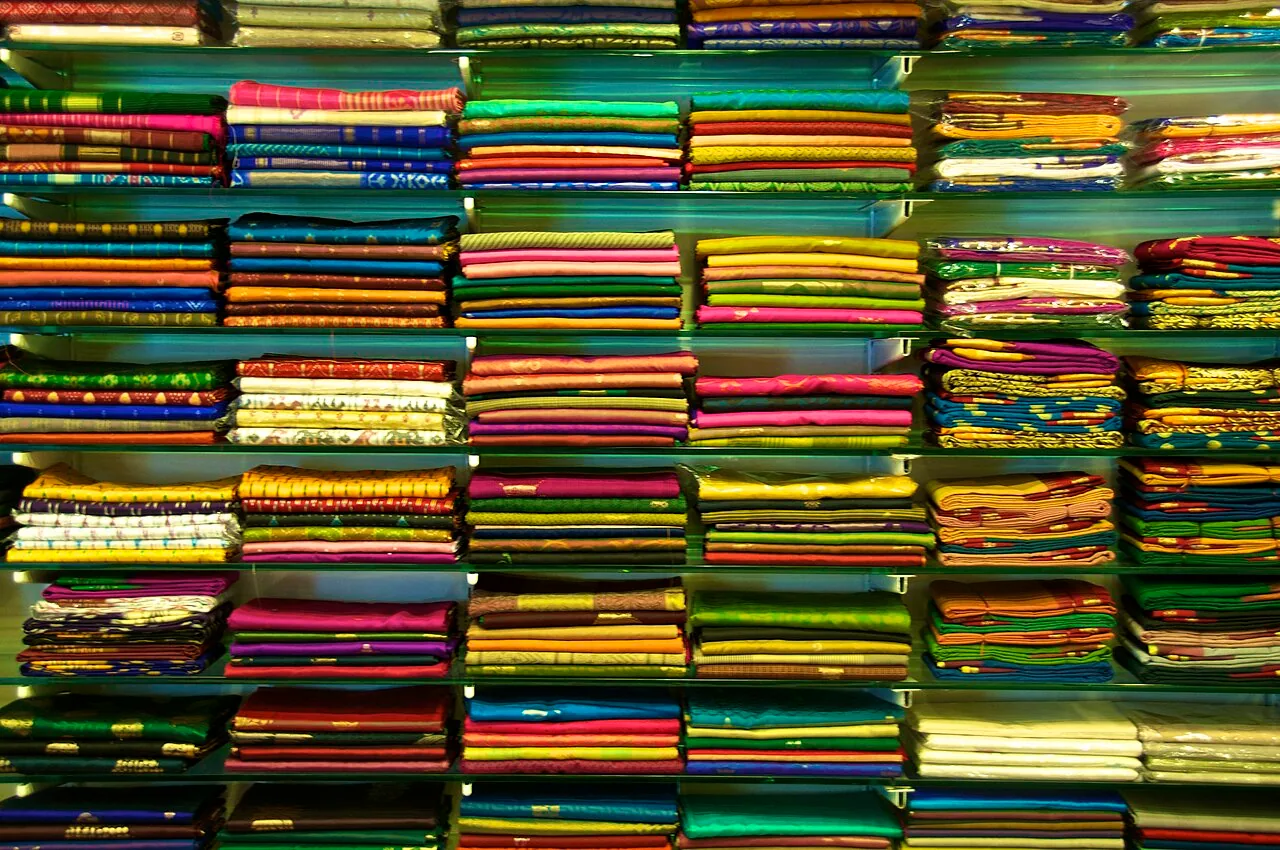
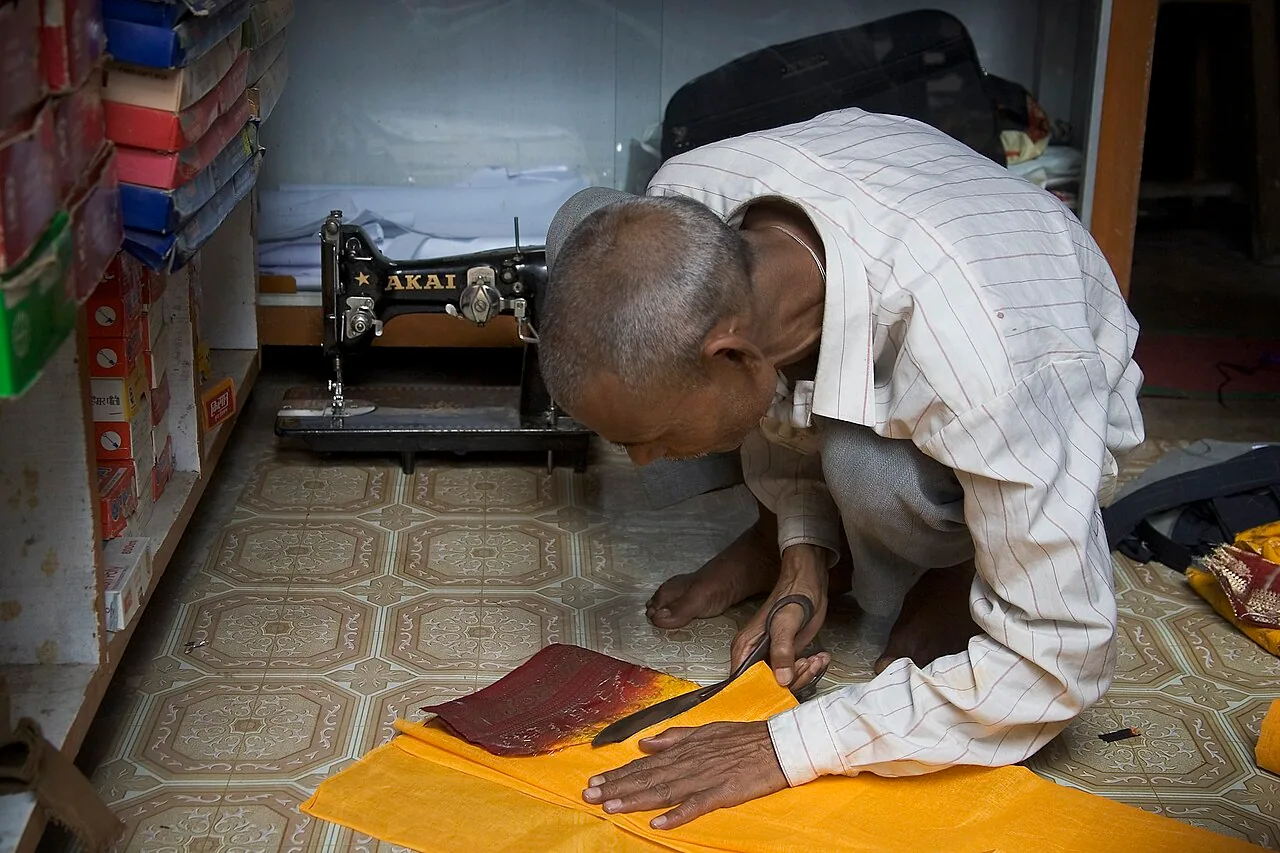
Photo credits: Sewing machine photo by Jorge Royan (CC BY-SA 3.0); shop shelves photo by screaming_monkey (CC BY-SA 2.0), both via Wikimedia Commons.
Related guides

Discover authentic bazaar markets & local shops online.
See what local shops stock and what they charge, then visit the shop to check the item and pay at the counter.