How to Identify Real Leather in Bags, Belts and Shoes
Real leather has a distinct smell, uneven grain, and a warm feel that synthetic alternatives cannot copy.
FRQ Editorial
FRQ Journal editorial team
Prices and shop details come from live FRQ listings and can change.
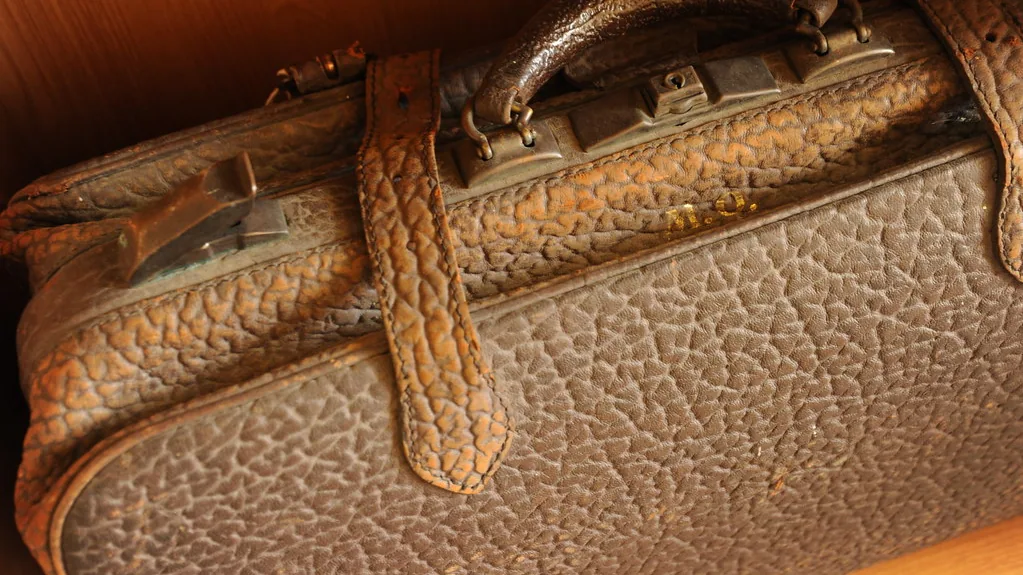
You can tell real leather from fake in under two minutes at the shop itself, without special tools. The first two signs are the smell and the way the material feels against your skin.
Real leather carries a natural, slightly sweet scent that lingers. Faux leather smells like chemicals, plastic, or nothing at all. Run your fingers across the surface: real leather is warm and slightly uneven, while synthetic leather feels cool, perfectly smooth, and plastic-like.
How to identify real leather belt
Check the buckle and the edge
On a belt, flip it over. Real leather belts have a rough, fibrous back that matches the front in colour but feels different. The edges are usually painted or burnished and show tiny fibres under a magnifier. A cheap belt will have a smooth, plastic-coated back and edges that look machine-cut with no fibre.
- Smell the belt near the buckle; real leather smells organic, not like glue.
- Bend the belt sharply; real leather creases and holds the bend, fake leather curls back.
- Look at the holes; real leather holes have rough, fibrous edges.
- Check the buckle attachment; real leather belts use stitched or riveted loops, not glued plastic.
- Press your thumbnail into the strap; it should leave a soft dent that slowly disappears.
How to identify real leather shoes
Look at the lining and the sole attachment
Shoes are the easiest to test because you can bend them. Real leather shoes flex at the ball of the foot and crease naturally. Synthetic shoes bend in strange places or barely bend at all. The lining inside real leather shoes is usually soft, breathable leather or cloth, not shiny plastic.
- Smell the inside of the shoe; real leather has a natural scent, faux leather smells synthetic.
- Flex the shoe from toe to heel; real leather creases softly, fake leather resists or cracks.
- Examine the inside lining; it should be soft and fibrous, not plastic-smooth.
- Check the sole stitching; real leather shoes are stitched or glued with visible thread.
- Press the insole; real leather compresses slightly and regains shape slowly.
How to identify real leather bag
Inspect the grain and the lining
Bags show their secrets on the inside and along the seams. Real leather bags have a soft, fibrous inner lining or a raw leather back. The grain on the outside is never perfectly identical across the bag; you will see small variations in pattern and tone. Fake bags have uniform grain and a smooth, plastic back.
- Turn the bag inside out; the back of real leather is fuzzy and fibrous.
- Run your fingernail across the surface; real leather leaves a faint mark that fades.
- Check the zipper; real leather bags use metal zippers, fake bags use plastic.
- Look at the stitching; real leather has slightly irregular hand-finished stitches.
- Smell the bag; real leather has a natural scent, faux leather smells chemical.
Common mistakes when testing leather
Many shoppers trust the price tag or the brand name, but expensive-looking items can still be synthetic. Others only check the front and ignore the back of the material, which is the quickest way to spot a fake. Some people press too hard and damage the sample, while others rely solely on the smell test without touching the material.
Avoid these errors
- Do not assume high price means real leather; always test.
- Do not only look at the front; always flip the item over.
- Do not press with a sharp object; use your thumb or fingernail.
- Do not rely on the smell alone; combine it with touch and sight.
- Do not ignore the edges and stitching; they reveal the most.
What to ask the shopkeeper
A polite question can save you money and give you confidence. Ask whether the item is full-grain, top-grain, or corrected grain leather. Ask what country the leather was tanned in and whether it is vegetable-tanned or chrome-tanned. Ask for a small scrap or edge piece to test, and ask about the warranty against peeling or cracking.
- Is this full-grain or corrected-grain leather?
- What type of tanning was used, and where was it done?
- Can I see the back of the material or a small edge scrap?
- What is the warranty if the leather peels or cracks?
- Do you offer a return if I find it is synthetic?
Frequently asked questions
Can I identify real leather with water?▼
A drop of water on real leather is absorbed slowly and darkens the spot slightly. On faux leather, water beads up and rolls off. This test works best on unfinished or lightly finished leather, but it can damage polished or waterproofed items, so ask the shopkeeper first.
Does real leather always have a smell?▼
Almost always, yes. Real leather has a natural, slightly sweet or earthy scent from the tanning process. Faux leather smells like plastic, chemicals, or has no smell at all. If the item is stored in a scented shop, the leather smell may be masked, so use the touch and crease tests as well.
Is peeling leather always fake?▼
Not always. Poorly tanned or low-quality real leather can peel over time, especially on bags and shoes that face moisture. However, immediate peeling or flaking at the edges is a strong sign of synthetic leather with a plastic coating. Check the fibrous back to confirm.
How does real leather feel different from PU leather?▼
Real leather feels warm, slightly uneven, and soft with a natural give. PU leather feels cool, perfectly smooth, and has a plastic-like elasticity. When you press real leather, it creases softly and holds the wrinkle; PU leather bounces back instantly or resists creasing.
Can I trust the price to tell real leather?▼
No. While genuine leather is usually more expensive, some sellers overcharge for low-grade leather, and good-quality faux leather can cost as much as real leather. Always perform the touch, smell, and back-of-material checks regardless of the price tag.
Discover authentic bazaar markets & local shops online.
See what local shops stock and what they charge, then visit the shop to check the item and pay at the counter.